CONTAINER
LIGHT FURNITURE FOR MENTAL SPACE
In a society increasingly marked by stress and overstimulation, the need for personal ways of recovery continues to grow. Everyone finds calm differently. Container was designed from this insight: a design that uses light to create a mental space where the user feels sheltered, weightless, and protected.
What is “Container”?
The name Container derives from the English verb to contain: to hold, enclose, protect.
It refers to a psychoanalytic concept from the work of Wilfred Bion: containment. This process describes how a caregiver (such as a parent) receives and interprets a child’s emotions and impressions, making them understandable and less overwhelming. The caregiver becomes a “container” allowing the child to relax through understanding and clarity.
This principle forms the core of my design. Container offers a soft mental space where light and form define a boundary that cannot be touched but can be felt. It is visible, yet immaterial a line drawn by perception rather than matter. Within this space, light becomes both structure and comfort, reducing external stimuli while preserving a gentle connection to the world outside. It creates a moment of retreat, reflection, and release.
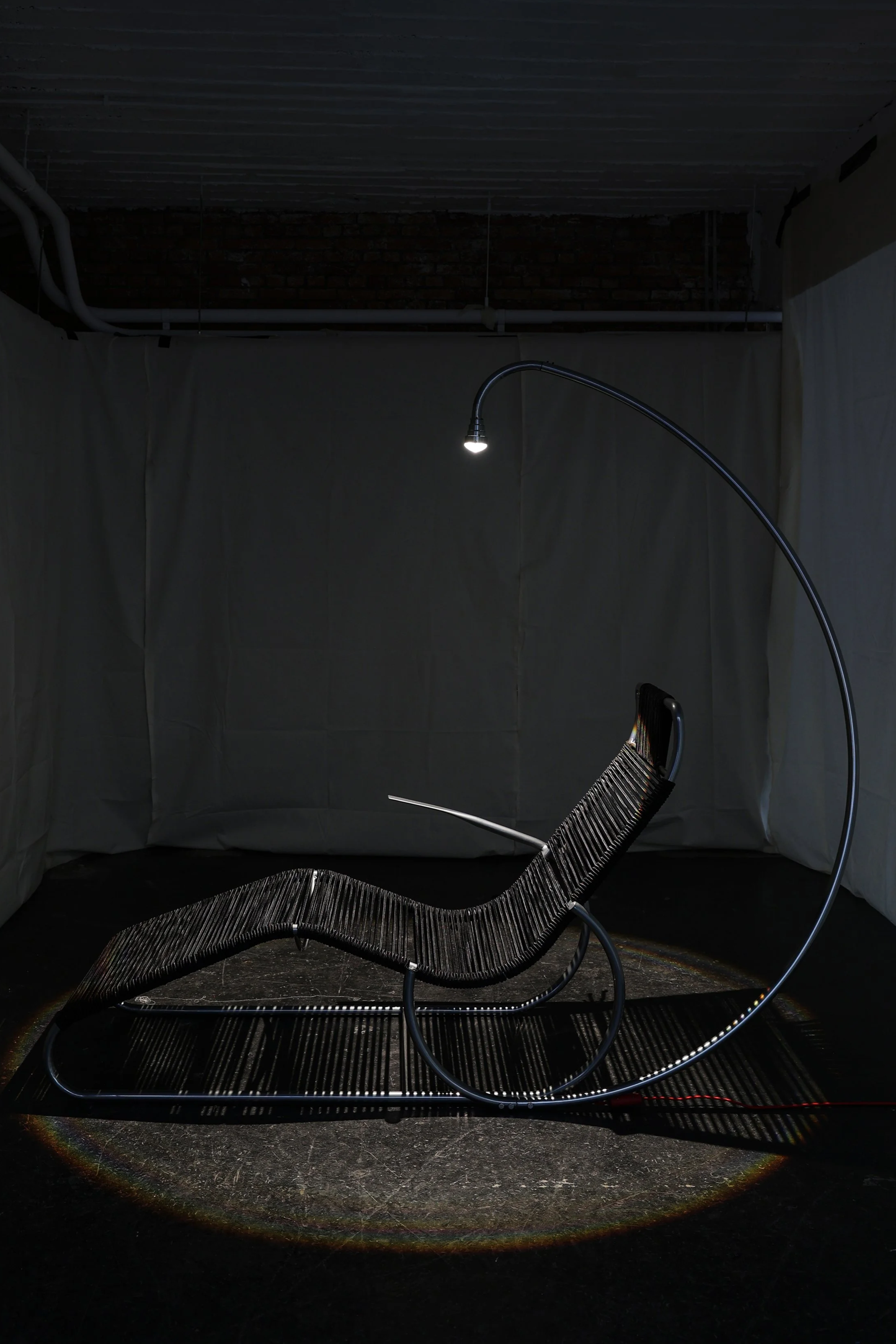
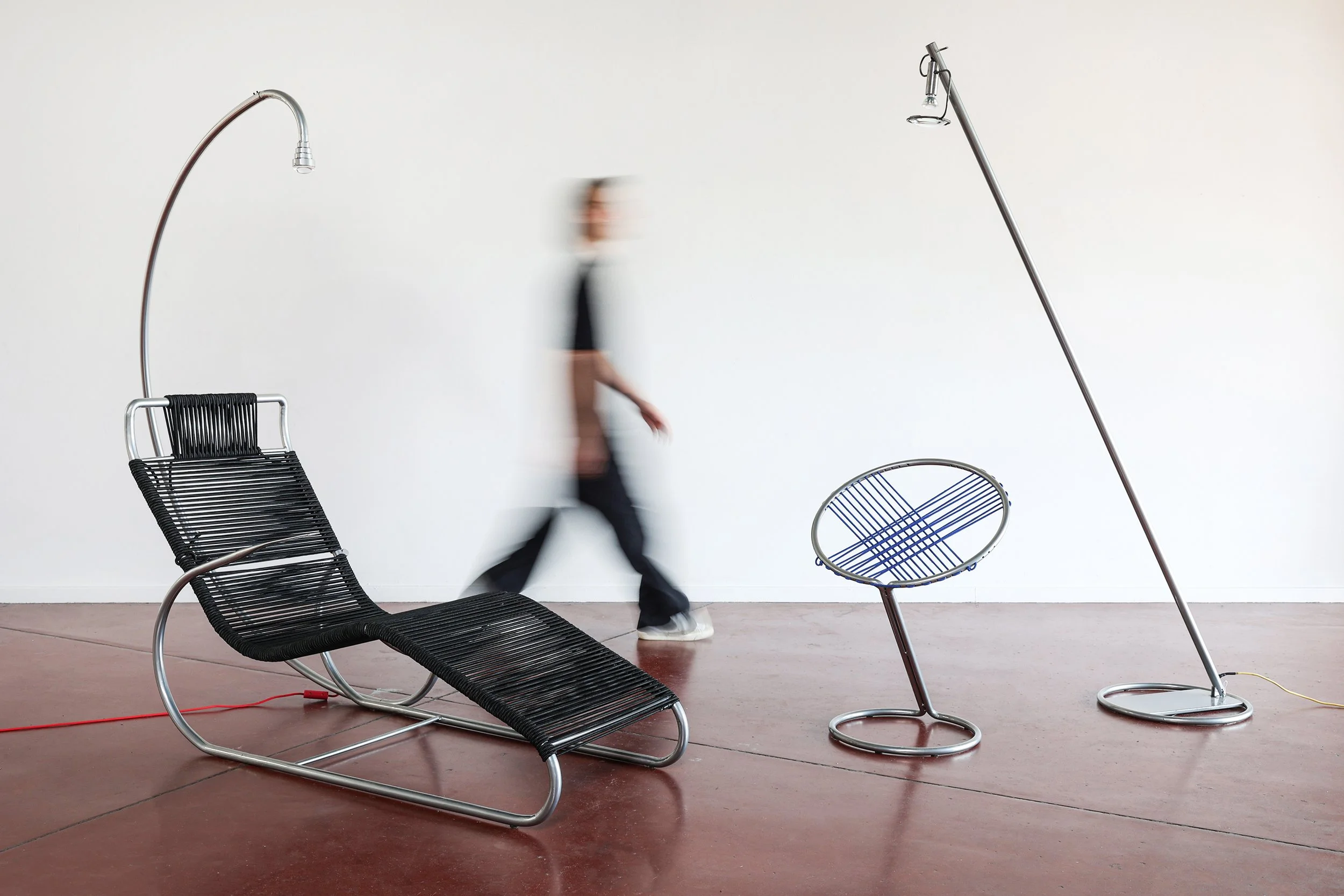
Container: chaise longue
The idea for the chaise longue began unexpectedly: the night the streetlights in my neighborhood changed from warm orange sodium lamps to cold white LEDs.
That change completely transformed the way I experienced my own street. It felt almost unsettling, even anxious, to see something so familiar turn strange in a day. Yet it also fascinated me: how light alone could alter emotion and perception so profoundly.
From that moment, I wanted to design something that used light as a tool for comfort a piece that could create a space of calm and protection.
My first sketches showed a beam of light shaped like a cocoon, an invisible architecture made only of light. When I projected light through a convex glass lens, it created a clear boundary between light and darkness. Sitting beneath it, I felt sheltered but not yet comfortable.
Something was missing: an anchor point within this beam, a place for the body to rest.
That led me to study posture and ergonomics, where I focused on Charlotte Perriand’s research into reclining forms that align the body along a single axis allowing total support and a sense of weightlessness. This became the foundation for my design.
Also inspired by Mies van der Rohe and Marcel Breuer, I constructed a continuous tubular frame wrapped with elastic bands. These elastic bands follow the shape of the body, supporting it entirely while adding a sensation of floating.
The lamp flows naturally from the frame, following the Bauhaus principle and the legendary quote of Ludwig him self form follows function.
The square, symbolizing stability and structure, formed by the shade of the frame.
The circle, associated with unity and calm, appears in the circle of light projected on the ground.
The triangle, a sign of direction and focus, defines the light beam itself.
Together, these elements create a harmonious composition a cocoon of light and form, a space where you can pause, breathe, and simply be.
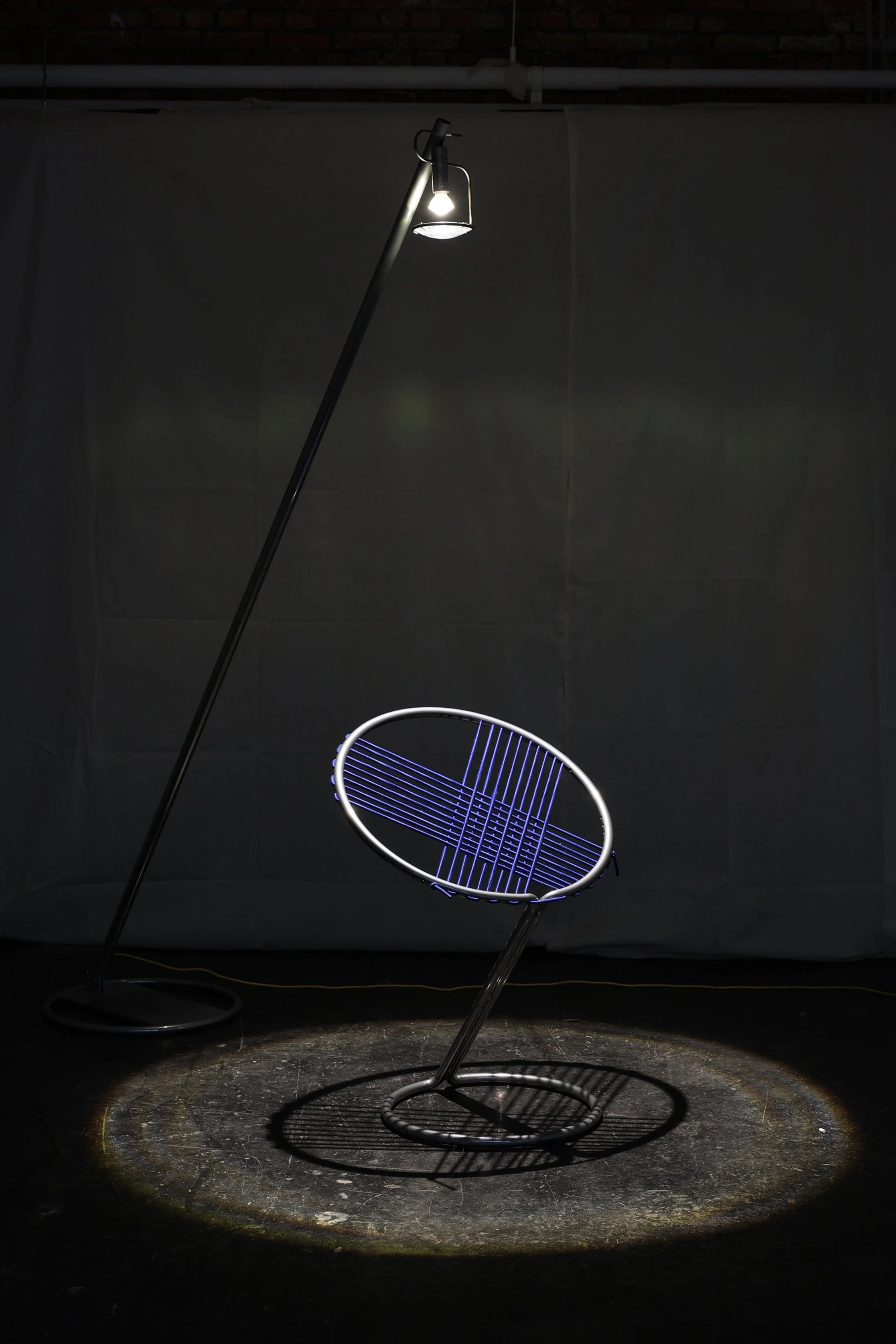
Container : Loop + lamp
he Loop stool and lamp mark a return to the essence of my process — feeling, experimenting, building with my hands.
Before anything else, there was the lamp. I needed to experience the light I had been drawing and imagining for months. So I built one, using whatever materials I could find, just to sit beneath it and feel what I was actually designing.
After countless experiments and difficult design exercises, nothing seemed to work. Everything felt too big, too heavy, too intrusive, or too rough for what I wanted it to be.
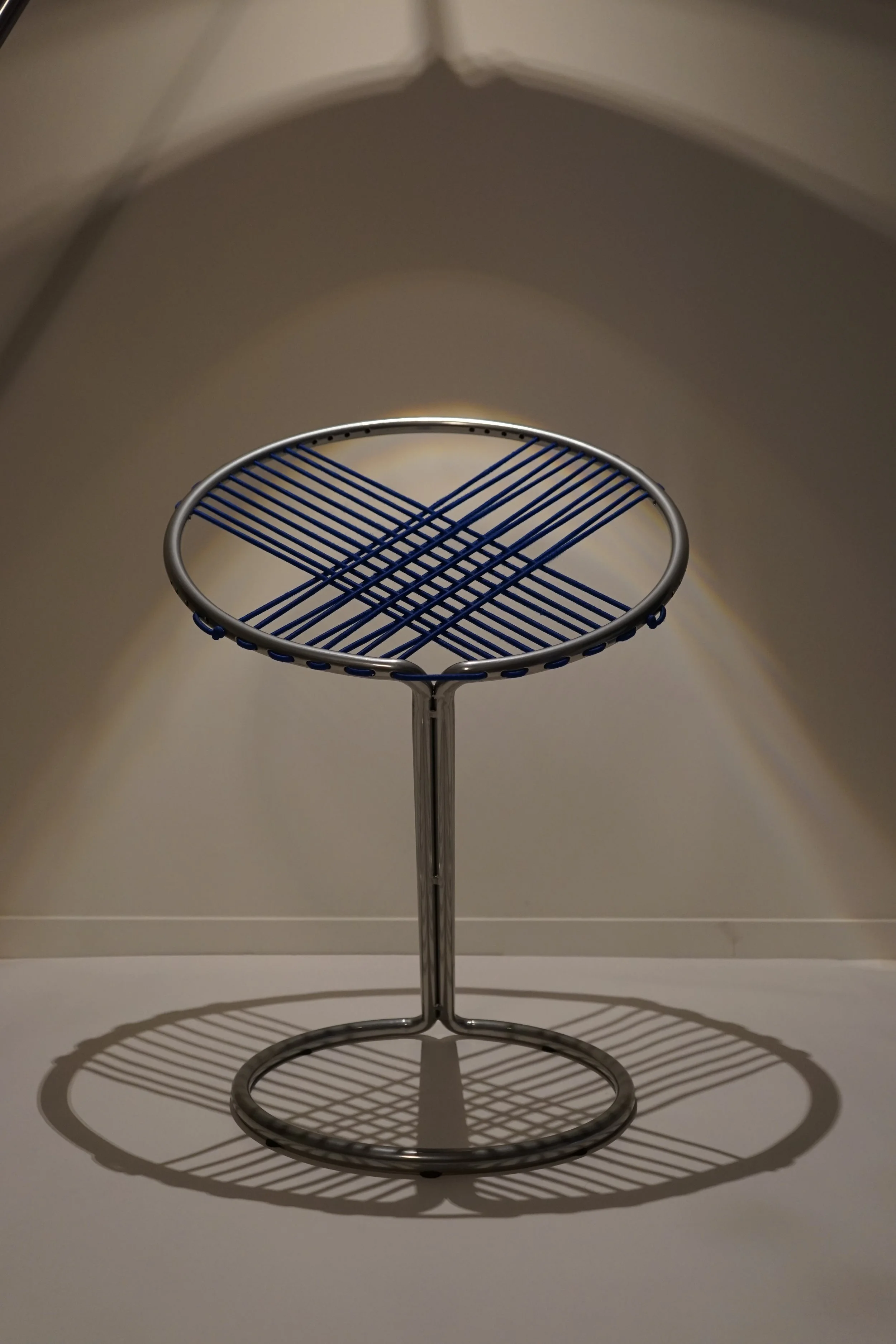
Then, came the familiar “fuck it” moment that point of frustration after trying too long without progress. I pushed all my sketches and models aside, grabbed a few steel tubes, bent two circles, connected them with rods and suddenly, the Loop frame stood before me.
What I saw was an abstract, sculptural object that would be a serious challenge to make comfortable. I thought about how often high-end design looks incredible but often loses comfort somewhere along the way. I didn’t want that.
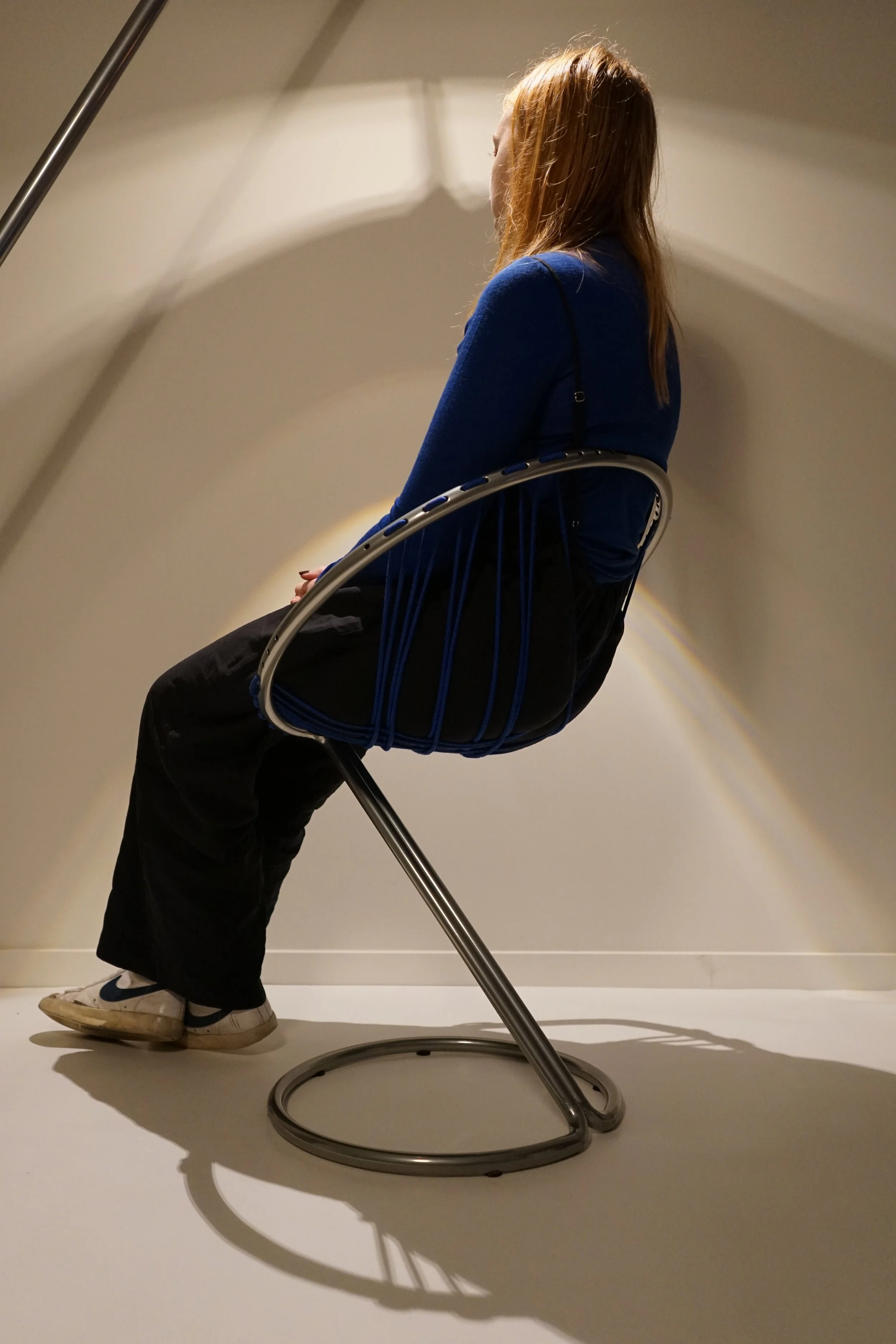
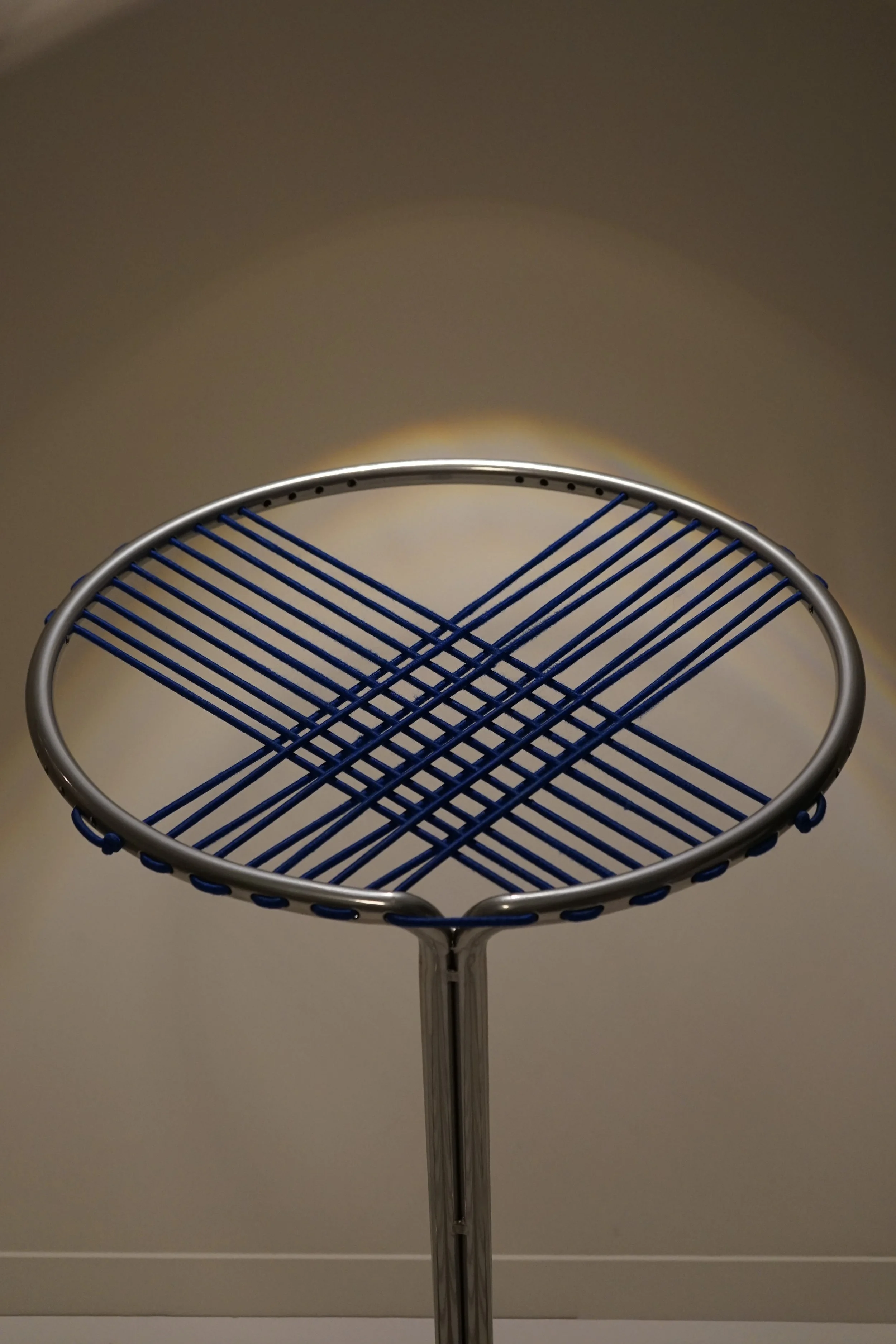
Motivated by that thought, I tried leather, fabric, rope nothing worked. Each material or shape weakened the clarity of the form or broke its minimal character. Then I found an old bicycle weel and realized that rubber has grip and elasticity. If I stretched it across the circle, it would stay tight, yet give way to my body when I sat down.
I tried it and laughed. It worked. The seat shaped itself to me, creating a soft, suspended cradle. The surprise of how good it felt fit perfectly with the Container philosophy: you don’t see the comfort, but you feel it.